
Scholars and Spooks
The Role of Universities in Deep Politics

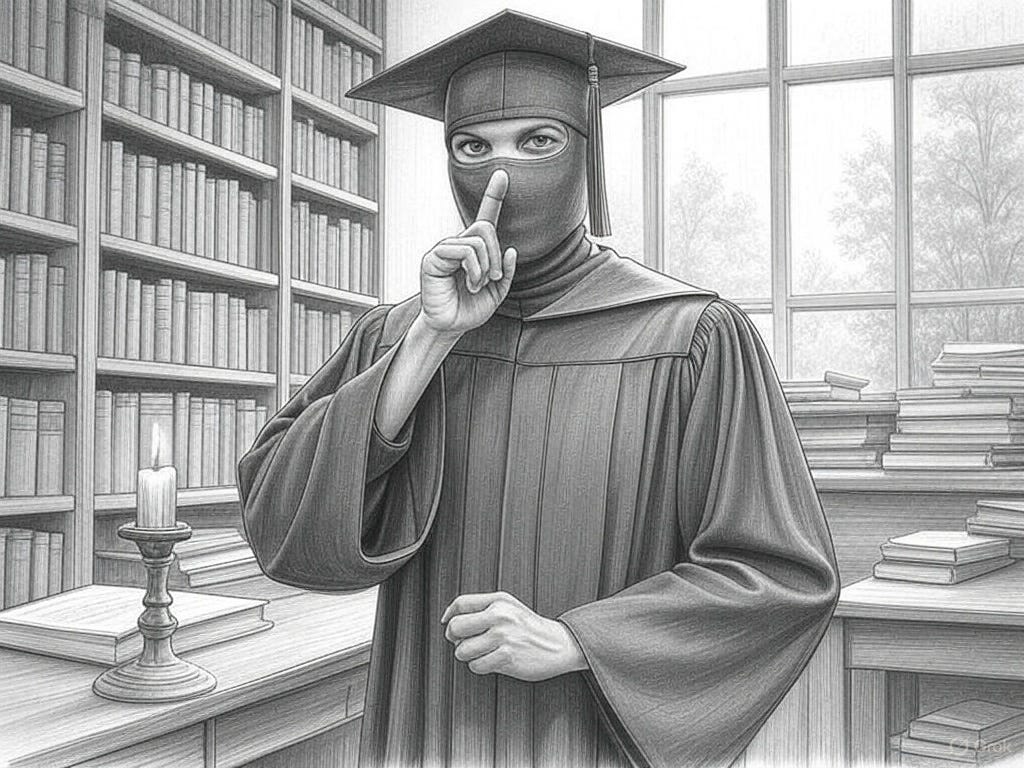
The intricate dance between the intelligence community (IC) and academia has fascinated some and completely flown under the radar of others. Understanding this interplay is crucial to grasp the moving forces behind both past and current events.
At the heart of it all lies a centuries-old web of shared interests, revolving doors, and subtle agendas; not only does this web shape international policy and the way we we look at the world, but it provides footholds and cover for intelligence operations in foreign countries.
Historically, the IC has viewed the Ivy League as both a resource and a proving ground. During the mid-20th century, universities like Harvard, MIT, and Yale became fertile recruiting territory for the agency, with professors and students alike drawn into the orbit of national security.
Meanwhile, spook-infested think tanks (Council on Foreign Relations, the Atlantic Council, etc.) emerged as the bridge between raw intelligence and polished policy recommendations. These institutions—part “research” hub, part elite networking salon—have churned out ideas that ripple through Washington’s corridors of power.
All of this has culminated in a system that captures the best and brightest, a system that turns those who do not make the cut into debt slaves for the majority if not the remainder of their lives, harnesses their discontent and molds them into useful, unwitting functionaries of deep politics (a-la Gene Sharp, the godfather of “nonviolent” regime change tactics—think rent-a-riot mobs.)
Critics argue that this entanglement compromises intellectual independence, turning universities more into tools of statecraft and indoctrination rather than institutions of learning and spirited debate. Defenders, however, see it as a pragmatic partnership, harnessing the brightest minds to tackle existential threats.
As the world grapples with new challenges, the ties between these spheres are evolving. This article delves into the history, mechanics, and implications of this shadowy nexus, uncovering how it shapes our present and future.
The History
The liaising between intelligence and academia actually predates the CIA, going all the way back to it’s predecessor, Wild Bill Donovan’s Office of Strategic Services (OSS).
The paths to power have always run through the Ivy league universities, and the IC has long stationed their recruiters along the way. Yale and Harvard are well known to have been used not only for recruitment, but even acting as middlemen in operations abroad.
Yale’s prestigious faculty and alumni, steeped in a culture of privilege and intellect, were naturally drawn into the OSS. One of the earliest prototypes of the then-nascent scholar-to-spook pipeline was a man named Norman Holmes Pearson, a Yale literature professor who later led counterintelligence efforts in London and was a key figure at the early intersection between academia and espionage.
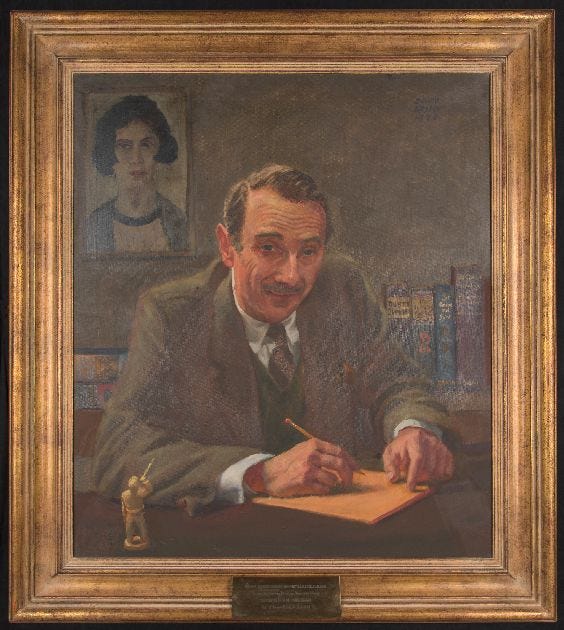
Pearson was a professor of English and American studies at Yale, a two time Guggenheim fellow, and maintained close relationships with literary figures of the time, including legendary poet Ezra Pound. Pearson would be recruited to work for the Office of Strategic Services (OSS) in London during World War II. By 1943 Pearson was working as part of the new X-2 CI (counterintelligence) branch that served as the link between the OSS and British Special Intelligence.
Author and historian Robin Winks said that "Some of his best work, done for the OSS in its final months, were analyses of the intelligence services of other nations."
The use of scholars as intelligence assets in WWII was so successful that it carried over into the Cold War, leading us eventually to the situation that we have today, with deep political intelligence assets and intel-adjacent collaborators embedded all throughout Western academia.
It was Pearson who, at the outset of the Cold War, helped to recruit James Jesus Angleton; a man who would become one of the more notorious mega-spooks of the 20th century, recognized at one time as “the dominant counterintelligence figure in the non-communist world".
Pearson, after turning down a position at the State Department, would go on to co-found and head Yale’s new “American studies program,” which was created to foster a cohesive understanding of American identity and culture during a period of global ideological competition with the Soviet Union, essentially creating a curated and institutionalized sense of national identity.
An influence operation by any other name.
(NOTE - You can read more about this American Studies program and its effects on American thought HERE.)
In his hefty tome Cloak and Gown: Scholars in the Secret War, Robin Winks argues that Pearson used the American Studies program as a recruiting tool for U.S. intelligence agencies, particularly the newly formed CIA.
(NOTE - It’s worth mentioning that Klaus Schwab, the infamous founder of the World Economic Forum, was recruited by Henry Kissinger at Harvard via a CIA program. We covered this in The Men Behind the Curtain - Part 3. Additionally, John Marks’ book The Search for the Manchurian Candidate (1979) further details Harvard’s involvement in MKUltra.)
Universities Involvement with the CIA’s Greatest Hits
The Cold War created conditions that enabled the CIA and broader U.S. intelligence apparatus to expand significantly, operate with reduced oversight, and, in the eyes of its critics, become a "rogue monster." It gave the CIA, Pentagon, State Department and the private military-industrial complex the license to do the unthinkable, all in the name of ‘beating the Russians,’ or at least that was the justification given to the public.
As with the OSS, the CIA worked closely with the Universities on a litany of dubious operations.
One of the more well known of these operations was the CIA’s MKUltra program, which conducted psychological experiments to develop mind-control techniques, often using universities as fronts to obscure agency involvement. Harvard was a key site for these activities, leveraging its academic prestige to facilitate covert research with diplomatic implications.
Harvard psychologists, funded by CIA front organizations like the Human Ecology Fund, conducted experiments on unwitting subjects, including students and foreign nationals. These studies aimed to counter Soviet influence by developing interrogation and propaganda techniques, which were shared with allied governments through backchannels.
Dr. Henry Murray’s experiments on students, including Ted Kaczynski (later the Unabomber) then a 16-year-old Harvard student, endured over 200 hours of Murray’s experiments from 1959 to 1962, experiencing severe psychological abuse. These experiments included stress responses to test their resilience and mental breaking points. (John Mark’s In Search of the Manchurian Candidate is recommended for further reading.)
The CIA suppressed public knowledge of MKUltra by classifying research and using academic cover to deflect scrutiny. Declassified documents (released in the 1970s) revealed Harvard personnel played a significant role, but initial censorship delayed exposure. (#,#)
Harvard’s prestigious reputation provided legitimacy, shielding the CIA from scrutiny. Faculty like Murray and others were likely unaware of the full extent of CIA involvement, believing they were conducting pure science.
Operation Mockingbird is another infamous CIA program that utilized the Universities; this time, the goal was to infiltrate media and academic institutions to shape public opinion and “counter communist narratives” globally. Though the fight against Communism was invoked to justify what they were doing, the network built-out during this time would later be used to target populist uprisings in modern times.
Columbia University, home to the prestigious Columbia Journalism School, was allegedly a hub for recruiting journalists and scholars to influence foreign media.
In the 1960s, Columbia’s School of International Affairs (now SIPA) hosted CIA-funded seminars with foreign leaders, facilitating unofficial negotiations on trade and security. These events, disguised as academic exchanges, allowed the CIA to broker deals without formal State Department involvement.
CIA-linked academics allegedly suppressed critical reporting on U.S. interventions (e.g., Chile’s 1973 coup) by promoting sanitized narratives in journals and media, a precursor to modern censorship tactics.
Carl Bernstein’s 1977 Rolling Stone exposé on Mockingbird named Columbia as a CIA recruitment hub.
The monster continued to grow through the decades, becoming so bulbous and over-sure of itself that, despite the inherent secret nature of its objectives and means, everyone knew that intelligence monster (in conjunction with the military industrial complex) had become something that existed above and beyond our democratically elected officials. It was the elephant in America’s living room, heightened after the Assassinations of John F. Kennedy and Martin Luther King, culminating eventually in the Church Committee.
The Church Committee was one of the most historically significant committees to have ever come out of the United States Senate. Its original name was the Senate Select Committee to Study Governmental Operations with Respect to Intelligence Activities, but it was referred to colloquially as ‘the Church Committee’ Sadly, most Americans know very little, if anything, about this committee.
Related - The Church Committee for Dummies
Not only was it significant for what it revealed about the agency, but it also marked the moment that the CIA began to outsource most of its controversial operations to various cut-out organizations, creating plausible deniability. This is exactly what lead to things like the creation of the National Endowment for Democracy (NED), the National Democratic Institute (NDI), the International Republican Institute (IRI), and the utilization of USAID to make it all hum.
(NOTE - We covered the interplay between these organizations in greater detail recently in a post called Two Wings, One Ugly Bird.)
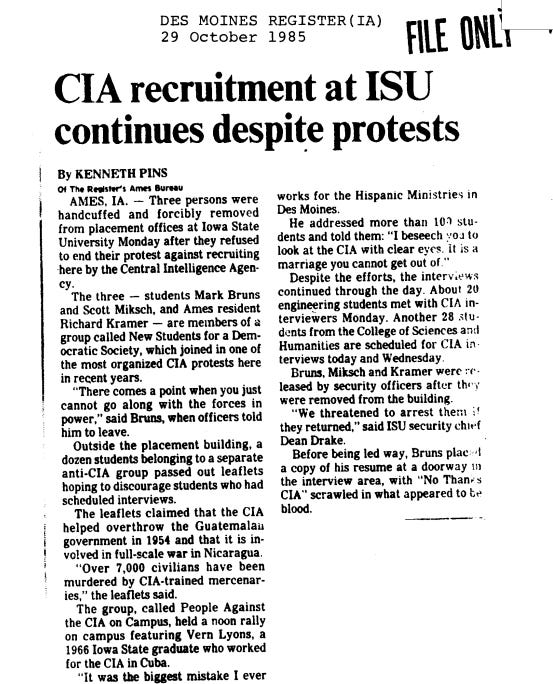
And so, instead of the CIA acting directly, they would begin building out the greater network of NGOs that we know and love today, using them and the universities as fronts. In the past, there was pushback from students (see below,) but as time went on, they successfully turned colleges into indoctrination centers, causing student opposition—and even awareness—toward the CIA’s activities on campus to evaporate completely.
How it Works Today
Two of the major functions of the intelligence/academia nexus is to facilitate internet censorship, promote credentialism and to carry out what is referred to as shadow diplomacy.
Shadow diplomacy refers to covert or informal diplomatic activities conducted by state or non-state actors outside official government channels to influence foreign governments, organizations, or public opinion while maintaining plausible deniability.
Despite all the talk of ‘defending democracy’ and ‘democracy promotion’ from the Universities and the various CIA and State Department cut-out organizations, the functions mentioned above are literally used to undermine democracy at home and abroad.
Censorship is the other big one. The CIA’s central role today is to shape the global “information environment,” in other words, to systematically weed out all dissent from the various State Department agendas via “soft power” influence operations.
Basically, the Western establishment has been using the United States and its interagency blob to run the world. There are very few countries where USAID and the Universities don’t have some kind of foothold. Again, it looks bad to have the CIA/State Dept./Pentagon directly influencing foreign countries, but it looks fine when its the universities and USAID.
This is the shadow diplomacy aspect at play, and can also be referred to as backchannel statecraft. These organizations can carryout their long-term plans regardless of who sits in the White House, it’s a very similar situation at the DOJ, and we are currently seeing the internal war between the executive and the judicial at play with what’s happening between Trump and these “activist” judges and legal operatives like Norm Eisen and Anthony Romero.
The universities are integral to the censorship industrial complex, serving as research and operational hubs funded by government agencies to develop and legitimize censorship techniques. Over 60 U.S. universities receive significant funding—approximately $100 million annually—from the National Science Foundation (NSF), USAID, and other agencies to establish "disinformation studies" programs. (#,#,#)
The National Science Foundation, despite its claims of being independent from government, is widely seen by those who follow the interplay between government and the NGOs as the civilian arm of the Defense Advanced Research Projects Agency [DARPA].
Universities like Arizona State University (ASU), Yale, and Cambridge are cited as examples of institutions hosting Pentagon-, State Department-, or CIA-funded programs that analyze and target "disinformation." It’s worth noting that ASU’s president is also the chairman of In-Q-Tel, the CIA’s venture capital arm.
Mike Benz—a former Cybersecurity official at the State Department turned educator/whistle blower—has claimed that ASU’s Center on Narrative, Disinformation & Strategic Influence acts as one of many CIA cut-outs, creating databases of pro-Trump social media content and developing "intelligence dashboards" for censorship policies.
The University of Washington’s Center for an Informed Public (CIP), funded by the National Science Foundation and other agencies, studies “misinformation” and develops rapid-response frameworks to counter online narratives. It has international collaborations, including with European and Asian research networks.
CIP’s research on global disinformation campaigns, such as those during the 2020 U.S. election, is shared with foreign governments and international organizations like the UN or NATO. These exchanges, often conducted through academic conferences, serve as backchannels to align media policies across borders.
CIP’s frameworks, like its “virality circuit breakers,” aim to slow the spread of “misinformation”, which really just boils down to weeding out dissenting voices, particularly populist sentiment, as it is seen as the most immediate threat to the international rules-based order. We know that they go after populism rather than general misinformation because there is a surplus of genuine misinformation online that is allowed to proliferate because it serves a purpose.
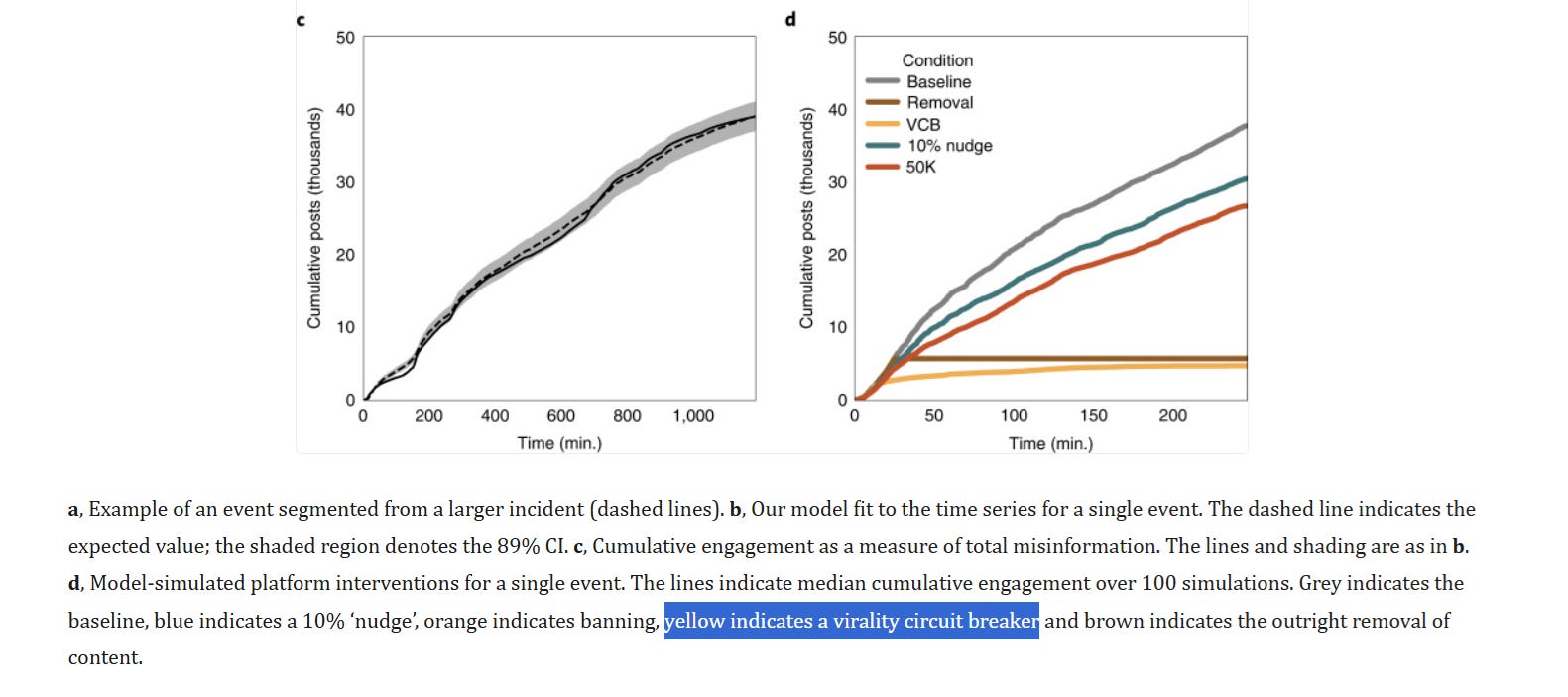
The NSF Awarded #2120496 ($2.25 million in 2021) to UW for disinformation research, per NSF’s award search. So again, here we have a DARPA/Pentagon-adjacent grantmaking body funding the research that would inevitably lead to the mass-censoring of Americans. On the plus side, NSF funding cuts in 2025 may have reduced CIP’s scope.
Still don’t believe the interagency deep state doesn’t utilize academics?
Take Jeffery Sachs, for example; he is a professor at Columbia University and has been deep in the elite milieu for a long time. He’s director of the Center for Sustainable Development at Columbia and is the President of the UN’s Sustainable Development Solutions Network and an advocate of the Sustainable Development Goals, which is the UN’s nefarious trojan horse for global control.
(Note - If you are unfamiliar with the SDGs, I made a short documentary for Dauntless Dialogue about them and their implications called Dark Agenda, you can watch the trailer HERE.)
Despite his background and affiliations, Sachs is now one of the most articulate voices speaking out about the situation in Ukraine. He can effectively speak on Ukraine, specifically the US sponsored regime change operation Euromaidan, because he watched the whole thing unfold from a privileged position.
His testimony below and on many alternative media appearances over the years is among some of the best modern evidence for the State Department/university interplay when it comes to the deep state’s brand of diplomacy or “democracy promotion” abroad.
The shadowy nexus between the intelligence community and academia is not a relic of the past, but a living, evolving force that continues to shape our world. From the OSS's early recruitment at Yale to the CIA's covert experiments at Harvard, this partnership has long blurred the lines between scholarship and statecraft.
Today, universities serve as hubs for censorship, shadow diplomacy, and the cultivation of narratives that uphold the global order, often at the expense of intellectual freedom and democratic principles. The machinery is vast—funded by government grants, shielded by academic prestige, and perpetuated through a revolving door of elite networks.
Yet, awareness of this interplay offers a chance to reclaim the independence of thought that academia was meant to foster. Figures like Jeffrey Sachs, once insiders, now challenge the system from within, exposing its machinations.
The question remains: can universities return to their roots as bastions of open inquiry, or will they remain enmeshed in the deep state's web?
As we navigate an era of information control and geopolitical maneuvering, understanding this nexus is not just an academic exercise—it’s a call to vigilance. The future of free thought and self-governance may depend on it.
Badlands Media articles and features represent the opinions of the contributing authors and do not necessarily represent the views of Badlands Media itself.
If you enjoyed this contribution to Badlands Media, please consider checking out more of Ryan’s work for free at the Post-Liberal.
Badlands Media will always put out our content for free, but you can support us by becoming a paid subscriber to this newsletter. Help our collective of citizen journalists take back the narrative from the MSM. We are the news now.
Thanks for all your work putting this article together.
I believe the DS Rat Bastard CIA infiltration of academia is a huge part of their strategy to control the narrative and keep us enslaved.
There is also a deeper issue with our education system which is top to bottom FUBAR. Back in the 1920/30s when Rockefeller bought control of the education system because he didn't want workers who could critically think but only wanted worker to comply the education system was transformed into the broken mess we have today.
Awakening has to mean that we remove the rot from all our systems and institutions and we do NOT go back the the way it was.
The Golden Age will be like nothing we have experienced in our lifetimes.
God Wins!
God Bless!!!
"can universities return to their roots as bastions of open inquiry, or will they remain enmeshed in the deep state's web?"
Judging from Harvard's response to Trump's 'ultimatum,' probably not:
"Harvard will not surrender its core, legally-protected principles out of fear of unfounded retaliation by the federal government," (Harvard President) Garber wrote." This was in response to Department of Education Secretary Linda McMahon's letter to the University.
https://www.wcvb.com/article/harvard-president-responds-trump-administration-ultimatum/64745759
Of course, we shall see how this all plays out -- Trump has most of the cards, and would not have initiated this interaction if that were not the case. But clearly Harvard is not without some resources to fight back. How this goes will give us valuable insight into the future of the relationship of the Universities and the US Government.