

Are Jack Smith and Fani Willis in on the Plan?
Are Jack Smith and Fani Willis in on the Plan?
The Consequences of the Indictment of Donald Trump

Badlands Media will always put out our content for free, but you can support us by becoming a paid subscriber to this newsletter. Help our collective of citizen journalists take back the narrative from the MSM. We are the news now.
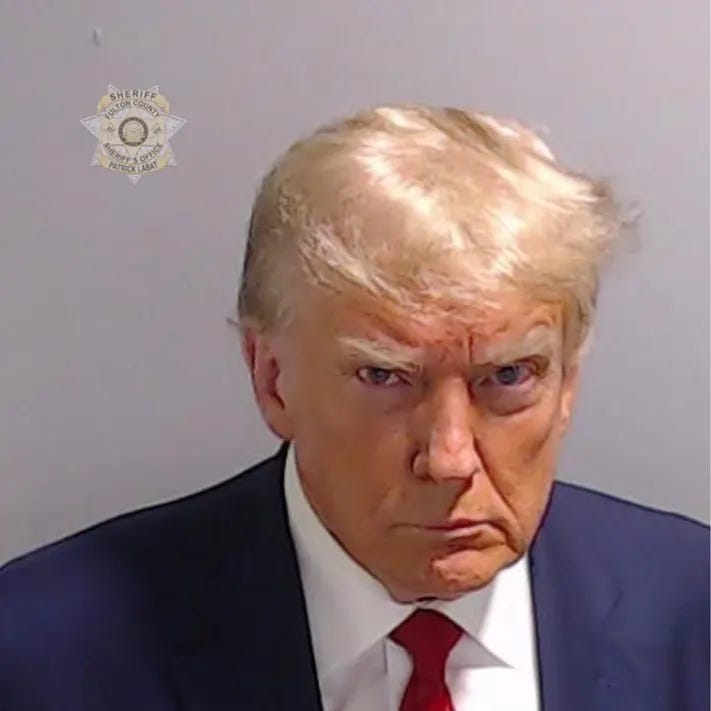
What is the best way to present evidence of election theft in the current environment? Answer: by indicting Trump for, essentially, lying about the 2020 election.
The recent indictments against Trump et al by Jack Smith and Fani Willis fundamentally rest upon the allegation that Trump has been lying about the 2020 election; if you read the indictments closely, you’ll see that this is the “crime” that gives rise to all the other alleged crimes for which Trump et al stand accused. One could argue that, through these indictments, the very act of disagreeing with the mainstream is being criminalized.
Nonetheless, in both cases, the prosecution has a serious problem: what if Trump has been telling the truth this whole time?
As a defendant, Trump has discovery powers and (at least in theory) can use these powers to place evidence of election fraud onto the court record; this could be huge, given the fact that 50 previous cases related to election fraud have been dismissed on standing, rather than because of any problem with the evidence brought forward in said cases. We haven’t had a proper hearing yet regarding election fraud, but now that Trump has been made the defendant in these cases, he MUST be given the opportunity to prove that he’s been telling the truth—this is a requirement of due process.
Will the NY and GA courts do the right thing? That remains to be seen. Perhaps these cases will reach a just conclusion—or, if they are mishandled, perhaps the Supreme Court may weigh in. Indeed, if evidence of election fraud makes it before the Supreme Court, then that could open a massive can of worms for the Biden administration…
To be quite frank, this looks like a set-up to me.
Basics of Court Procedure
To get a solid grasp of what’s happening on the legal front, we need to understand a few things about how court cases are supposed to work in general (many courts and officials transgress the rules they’re supposed to uphold. Nonetheless, there are still rules to this game.)
To begin, every court case, no matter what it is, begins with the cause (the illegal or unlawful act[s] alleged to have happened). There are a great variety of “causes” that could initiate legal proceedings; what matters most is whether a prosecutor or plaintiff can present the proper court with a sufficient amount/type of admissible evidence to support/prove the underlying cause or not.
A cause in law must meet certain criteria to be heard—these criteria are often referred to as the elements of the cause. For example, if you brought a defamation case against somebody, then you’d need to be able to prove that they intentionally lied in a malicious way, and that damages were sustained as a result. These are the necessary elements that must be proven in order to move a court to rule in your favor.
Conversely, if someone says something about you that is untrue, but they believed they were speaking the truth then no defamation has taken place (according to the legal standard). Until recently, it was considered common sense that a person ought not be punished for speaking the truth in good faith to the best of their ability.
Though Trump doesn’t face “defamation” charges per se, the same basic idea applies to his cases as well. Even if he’s wrong that the 2020 election was stolen, that’s not a crime; what makes his actions and statements “criminal” (per the indictments) is that he secretly knew he lost, and therefore has been lying this whole time.
In other words, Fani Willis and Jack Smith have both indicted Trump based on the belief that they can somehow read his mind…
Indeed, these indictments are so flimsy it makes me wonder if their true purpose is to assist Trump. We’ll get back to that idea shortly.
Standing Must Always Be Established Before Hearings or Trials
In addition to having the elements you need to prove your cause, you also need to bring your cause to the proper venue—you need to file your paperwork into a court that has jurisdiction over the substance of your cause. Jurisdiction, in turn, is broken up into three main components: territorial, personal, and subject matter.
Before a case can proceed, a court must review its contents to make sure that:
The act(s) took place within the proper territory (for example, a dispute between two neighbors in Ohio would not be heard in Tennessee); and
The act(s) was committed by an entity over whom the court has jurisdiction. This is also known as legal personality (individuals, courts, partnerships, governments, etc., are different types of legal personhood).
The act(s) are cognizable by the court (for example, you wouldn’t bring a trillion-dollar suit to a small claims court).
If these elements aren’t present, then your case won’t make it to the trial or hearing stage; before evidence and testimony can be heard, standing must first be established, and if standing is not first established, then the court can’t rule on the evidence. Keep this in mind whenever anyone tells you that “there’s no evidence because the courts threw out the cases,” for any newscaster promoting that idea betrays their own illiteracy when they make such claims; they may as well comment on a chess tournament while blindfolded.
In regards to the 2020 election: 55 cases were filed, and 50 of those were thrown out on standing [LINK]—that’s a LOT of evidence that never got the chance to be heard. Many of those cases probably should have been brought to a hearing or trial but, alas, not everyone follows the rules all the time, do they? One can reasonably presume that many of those cases were thrown out due to some form of corruption or compromise operating in the background, but I digress.
In any event, unlike all those cases that got thrown out, Jack Smith and Fani Willis’s cases are underway. The game is on. Given that Trump is essentially on trial for “lying” about the theft of the 2020 election, his defense rests upon proving that he was telling the truth.
Think about it: is it a crime to be incorrect about something? Is it a crime to disagree with your advisors? Is it a crime to attempt to stop a theft from occurring?
No, none of these things are crimes.
If Trump believed in good faith that the election was stolen, then his efforts to prevent the theft have always been entirely consistent with the oath he took when he became President. The fact of the matter is that Trump has never contradicted himself on the 2020 election—he’s been 100% consistent since the get-go—therefore, the prosecution is going to have a difficult time proving Trump to be a liar.
Meanwhile, Trump now has those powers of discovery that allow him to put his evidence on the record—almost all of it for the very first time.
Looking at the Indictments Themselves
Fani Willis’s indictment contains 41 counts, and only a handful of the counts aren’t about “false statements” or subsequent acts that arose from “false statements” (the solicitation of violation of oath counts depend on the prior existence of the aforementioned false statements).
Count 1 is the RICO charge, and it lists 161 separate “acts” that together somehow “prove” the existence of an organized criminal enterprise; a significant portion of these acts amount to things like tweets or normal conversations that officials might have if they were investigating election fraud.
Again, the only thing that makes these acts “criminal” is the presumption that they were carried out in a fraudulent manner by people who intended to overthrow the election.
Jack Smiths indictment isn’t much better. Right from the get-go, in paragraph 2, it says, “Despite having lost, the Defendant [Trump] was determined to remain in power… the Defendant spread lies that there had been outcome-determinative fraud in the election… these claims were false, and the Defendant knew they were false.” (Emphasis mine).
How does Jack Smith know that? Does he have psychic powers or something?
His indictment contains four counts, and all of them require that Trump was acting in bad faith in his attempts to rectify the election.
It can’t be said enough times: if Trump had been acting in good faith the whole time, then the necessary elements of all the counts against him cannot be proven, and there is no case—and Trump, as defendant, is now in a position to put his side of the story on the court record.
Were Fani Willis and Jack Smith in on It?
The last thing the Deep State wants is for viable evidence of election fraud to make it onto a court record; now that these indictments have been filed, such evidence is undoubtedly forthcoming. Had they never bothered to file these indictments, they could simply continue to use their media mouthpieces to discredit and denounce Trump like they’ve always done and call it a day.
Perhaps they just can’t help themselves—perhaps they loathe the idea of Trump being a free man—or perhaps it’s all part of the plan.
I’m only speculating here—I’m on the fence myself about whether or not these prosecutors are in on it—but, just for the sake of thinking things through, it would explain a lot if they were. These indictments are downright pitiful; they invoke the flimsiest of premises in order to make the most far-fetched claims imaginable.
What they’ve have handed to Trump are multiple opportunities to present his side of the story in a courtroom. Both of their indictments leave a tremendous amount of wiggle room for Trump and team to operate, and these court cases represent the ideal environment in which to disclose compelling evidence of election fraud—evidence that, let’s remember, has not yet been heard.
Not only that, but these indictments shift the optics in favor of Trump; at the end of the day, many people feel left behind, persecuted, and so on, and now Trump is looking more and more like he’s one of the people. Despite being a billionaire, he too has a mugshot, and he too faces relentless challenges thrown at him by a broken and corrupt system that’s hurting everybody.
If Trump and the military are going to take back the country, there needs to be a necessary threshold of support amongst the people. It could be the case that mass arrests haven’t occurred to avoid sparking a civil war. If the optics aren’t right, things could get bad. It very much looks to me like what’s happening right now is designed to serve Trump both on the legal front, and also the optics front simultaneously.
Either Jack Smith and Fani Willis are desperate to get Trump on anything they can, and have served up the best they’ve got, or perhaps it’s the case that these indictments were crafted to give Trump precisely the ammo he needs to proceed with the next phase of the 5G war. Either way, they have been filed, and there’s no going back now.
If it’s part of “the plan,” then what further evidence of coordination might we find?
Possible Fulfillment of a Comm? White Squall Revisited
What if I told you that the events of today were predicted years ago by an anonymous insider on 4chan?
It is my opinion that White Squall—a movie about a ragtag group of boys who are taken out to sea by a captain named Skipper, where they brave numerous storms ending with a giant tidal wave—is meant to be understood as a narrative-metaphor for the journey that Trump, Q, and Anons have been on since Q first appeared on the scene in October 2017.
(To learn more about how I came to that conclusion, I recommend reading that article, but right now, I just want to point out the fact that the last scene of White Squall involves the captain of the ship (Skipper) being placed on trial.)
Forgive me for spoiling the movie, but there are too many correspondences between its finale and what’s happening with Trump and his current court cases to ignore. The connections are too numerous for it to be mere coincidence.
In a nutshell, Skipper gets placed on trial for doing the best he can with his ship and crew while facing enormous, destructive natural forces. Does that sound familiar?
Most importantly, at the very end of White Squall, the Skipper is redeemed by his surviving crew, who stand by him during his trial. In a similar manner, loyal Anons are stepping into their role as the New News (“you are the news now” – Q), and are thereby helping to shape the social/informational landscape in a way that assists Trump to get his fair hearing. (When it comes to highly politicized proceedings, what happens in a courtroom is often downstream from what happens in the court of public opinion).
Could all of this be happening right now by accident? Or are we witnessing the fulfillment of a very long and detailed plan?
It’s deeply ironic that Trump et al are accused of engaging in a massive conspiracy.
Perhaps they are …
WWG1WGA!
Badlands Media articles and features represent the opinions of the contributing authors and do not necessarily represent the views of Badlands Media itself.
If you enjoyed this contribution to Badlands Media, please consider checking out more of my work for free at American Hypnotist.
The Five Rules of Propaganda
1. The rule of simplification - reducing all data to a simple confrontation between 'Good and Bad', 'Friend and Foe'.
2. The rule of disfiguration - discrediting the opposition by crude smears and parodies.
3. The rule of transfusion - manipulating the consensus values of the target audience for one's own ends.
4. The rule of unanimity - presenting one's viewpoint as if it were unanimous opinion of all right-thinking people: draining the doubting individual into agreement by the appeal of star-performers, by social pressure , and by 'psychological contagion'.
5. The rule of orchestration - endlessly repeating the same messages in different variations and combinations.
"Given that Trump is essentially on trial for “lying” about the theft of the 2020 election, his defense rests upon proving that he was telling the truth."
This is overreach. First Trump does not need to prove anything; all he must do (these are criminal allegations with jail time attached) is create a reasonable doubt about the government's case against him. This is a far lighter burden, and it is even lighter than the 'preponderance of evidence' standard used in civil cases.
Secondly, the issue is not whether Trump was telling the truth, it is whether Trump believed he was telling the truth. You do hit on this fact elsewhere, but it is a very important distinction. It is this distinction which gives Trump the right to bring evidence forward regarding his state of mind. If the matter was simply about 'the truth,' Trump's state of mind would be irrelevant; the government would be free to present whatever evidence they deem relevant to establishing 'the truth.' Trump's beliefs would be irrelevant; but in reality they are the essence of the matter.
Trump's right to bring forth evidence supporting his belief that the election was stolen from him is key to his defense, and also key to the disclosure that he and the White Hats are planning. The government cannot deny him the right to present this evidence, though they may well try. Those decisions (which would be violations of due process) may be appealed and if there is a pattern of obstruction by the government, can be cause for recusal, change of venue, or even dismissal with prejudice.
My belief is that these indictments were a smoke screen, intended to draw attention away from something [they] did not want people to see -- evidence of the Biden crime family's nefarious acts. The government does not want these cases to be heard, instead they will likely end up dropped as quietly as they can manage.